Edition 44: Friends of warminster Maltings

Edition 44: Friends of warminster Maltings

2023 Together!

I would like to begin on behalf of all the team at Warminster Maltings, by sending you our Very Best Wishes for the New Year!

In particular to all our customers, because, based on all the most recent reports published and broadcast, we are facing a particularly difficult start to the next 12 months. But, at Warminster Maltings, we will not be fazed by this, and we most sincerely hope neither will you.

However, if there is anything we can do to help along the way, please do not hesitate to ask. Of course, we are not bankers, but if you would like to bring your team, or even customers, to visit our Maltings, we will be more than happy to oblige. Or if we can help with editorial, or website material/graphics, you only have to ask. Or any other ideas that you might have, just pick up the telephone.

Together, we can overcome the ‘headwinds’ we keep being reminded of, and perhaps more easily than it may at first seem.

Quite the Best Value Malt that Money Can Buy!

At the end of November we introduced our 2023 Price List to all of our customers. For the second year in a row this was all about a significant price increase, once again caused by the inflation in world grain markets, this time triggered by the war in Ukraine.

It amounted to a price increase for most of our customers of 10-12%. But it seems this increase is quite modest when compared to the increases broadcast by our very much bigger competitors, who have announced price rises that appear to range from 28-40%! These more substantial price increases are a direct result of huge rises in the cost of energy, something that so far has had only a minimal impact at Warminster Maltings. What this all adds up to is, we, whose prices are normally a bit more expensive than our competitors, now appear to compete directly ‘head to head’ with the giants of the industry!

So this is a message to all those brewers who would prefer, but think they cannot afford, ‘floor made’ malt. All of a sudden, now you can.

There is no question, ‘floor made’ malt is better than pneumatic production. ‘Floor made’ stretches back centuries, and the new technology which has succeeded it was never about an improvement in quality, it was really all about, and just about, the economics.

Back at the end of the 19th century when the malting industry first began experimenting with alternative methods to ‘floor malting’, both revolving drums and air conditioned boxes, the then leading maltsters concluded the alternative methods “could not produce the high quality malt demanded by brewers”. So they subsequently went back to building even larger and more spectacular ‘floor’ Maltings. Witness Robert Free’s grand Malthouse on the quayside at Mistley in Essex (one of seven in the town, now converted to flats), and Bass, the brewer, whose ‘floor Maltings’ at Sleaford, Lincolnshire, completed in 1906, was in a class of its own – eight blocks of Malt floors, each six stories high, with a 1000 ft frontage. Testimony to all this, the last floor Maltings to be built in Britain was as late as 1952, in Grantham, almost 100 years after Warminster Maltings.

The beginning of the end of large scale ‘floor made’ malt was the early 1960’s, led by Associated British Maltsters (ABM) who began building their cathedral-like pneumatic Maltings across the southern half of England. This, of course, all coincided with the industrialisation of food and drink and the arrival of the supermarket. Need I say more?

Leading U.K. ‘Floor Maltster’, 1961 advertising campaign.

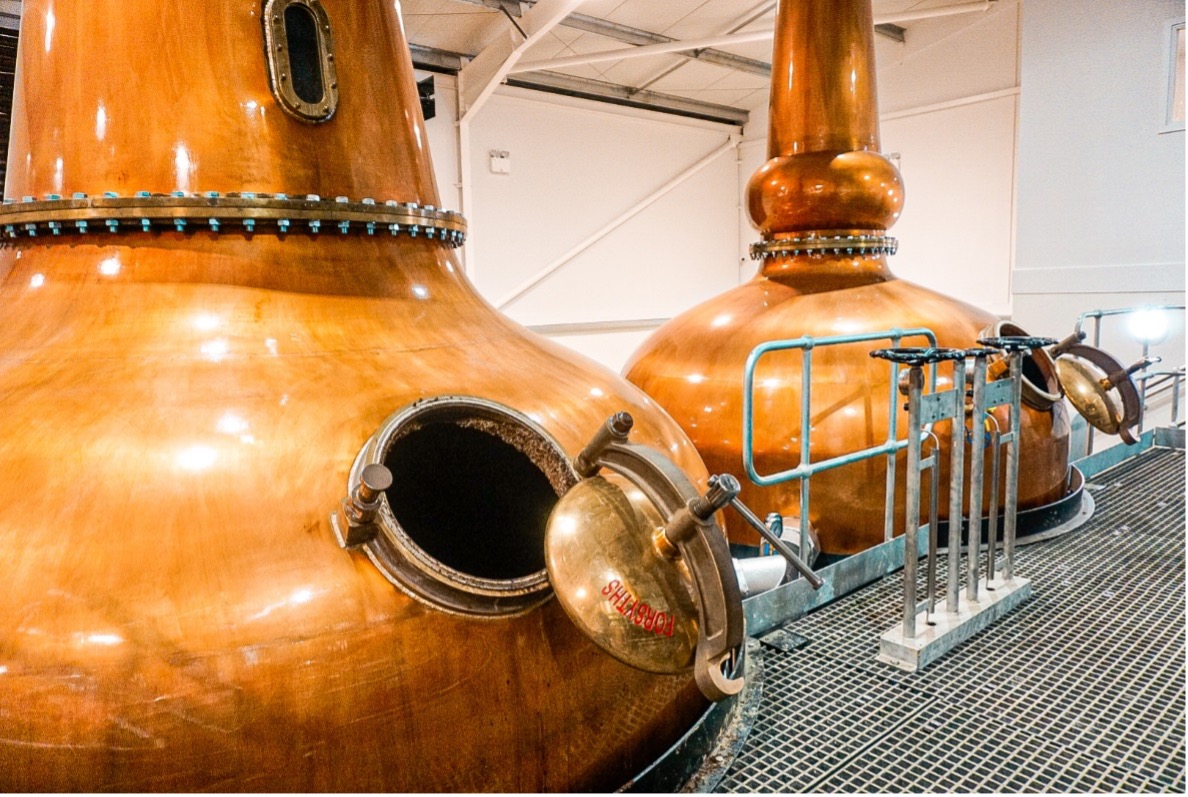
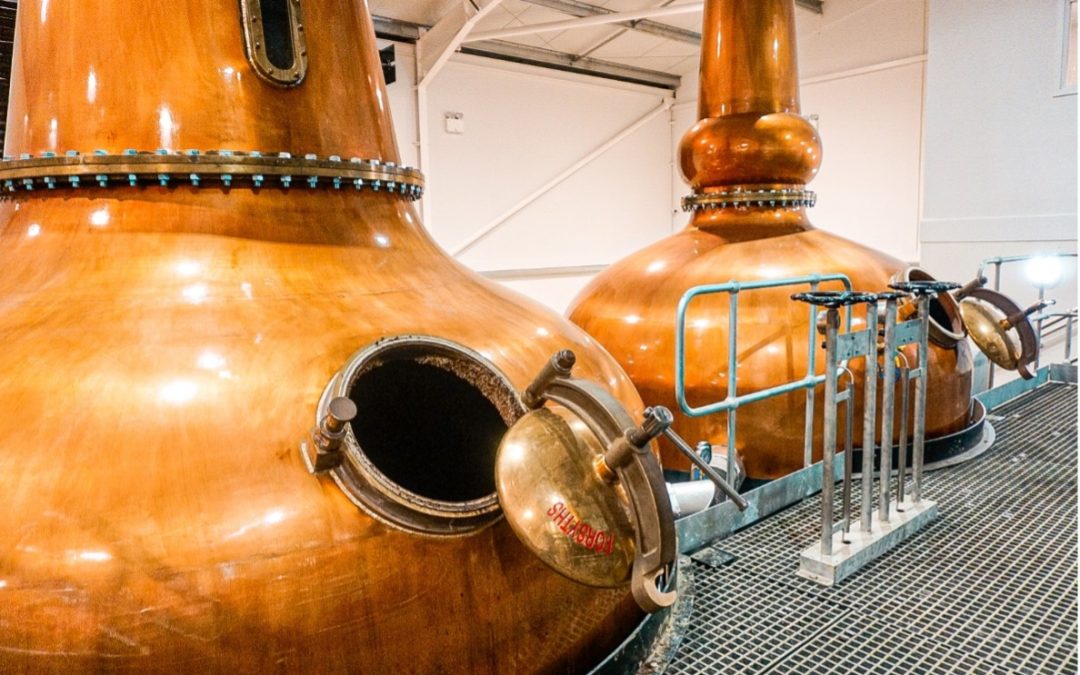
Will anyone build a new floor Maltings today? I very much doubt it. Warminster is one of only three still operating in England, and there are six more in Scotland, all of those north of the border being part of long established distilleries, producing some of the finest ‘single malts’!

So there you have it. Warminster Malt is not only a very exclusive product, it is also a unique opportunity to experience probably “the best brewing malt that money can buy”!

The Changing Face of the High Street

Analysis revealed by the BBC at the beginning of December, has highlighted that over the two years of Covid lockdowns, there were marked changes to the face of the British High Street.

As we have all witnessed, banks and department stores have all but disappeared, but instead beauty salons and tattoo parlours, along with more places to eat and drink, have quietly crept in. What it amounts to is the High Street is transforming itself from a place to buy things into a place to, how shall I put it, to entertain or be entertained?

But what stands out in this report for me, based on data from the Ordnance Survey, post Covid there are now “700 more pubs and bars” on our High Streets than there were before, along with cafes, tea rooms and fast-food outlets. The evidence to support this in Warminster is the reopening of two pubs in the town centre, both of which had been shut for most of the last 3 years.

All we ever read about is the pubs that are closing; a lot of this publicity deliberately highlighted and targeted at the government by industry bodies lobbying for support. So it is refreshing to see another side of the story. Of course, this news may be of little consolation to the village pub which is struggling, but on the other hand, perhaps therein there lies a message.

But this report should be good news for our Brewer customers. Invariably, as one door closes another one opens!

Slow Progress

Work on our final restoration project is painfully slow, simply because the small team of carpenters and joiners we require at the present stage are only able to give us 2-3 days work each week. This team has come to our rescue when the original contractors walked out after just two days – they either decided they had ‘bitten off more than they could chew’, or they were lured away by more lucrative rewards elsewhere. So our present team kindly shoe-horned us into other existing commitments, and we are extremely grateful to them.

More than that, studying the workmanship going into our kiln structures, I believe that, once again, fate has served us particularly well. This woodwork is quite magnificent, and a true replica of what we believe was the original structure, so as authentic as we can make it.

There is no intention of firing up these kilns another day, we do not have the infrastructure to load, or unload them, or the personnel to operate them. Besides, anthracite fired Malt kilns pose a fire risk to the whole Maltings structure. It was back in 1924 when more than half the Maltings complex was destroyed by a fire that was almost certainly precipitated by one of these kilns malfunctioning. It was a common occurrence across the whole of the industry at the time. Our then proprietor, Dr Beaven, was unfazed by events, and immediately set about rebuilding. A similar setback today would probably have a very different outcome imposed upon us, sat, as we are now, right in the middle of a residential area!

Kiln No.3

Finally…

…a great picture taken just before Christmas by one of our customers, Corinium Ales at Cirencester. The sledge is their own, I am not aware our hauliers are carrying them, yet.

A Very Happy New Year to You All.

Robin Appel

Edition 43: friends of Warminster maltings

Edition 43: friends of Warminster maltings

It’s November…

…And so it is the beginning of the new malting season, & a step change at Warminster Maltings on different fronts. First of all The Good News: as we say farewell to the 2021 crop barleys, we set about the fresh 2022 crop. And what a crop we have from this latest harvest – the quality is so good, I struggle to recall when we last had barleys as good as these.

We are talking about bold and heavy barley grains, less than 12% moisture (very safe in store), grain nitrogen at the perfect mid point, 1.50 – 1.60%, and bursting with germinative energy. These barleys are absolutely designed to make ‘tip top’ quality malt!

But we have to be careful. Our maltsters describe these barleys as almost ‘wild’, they have so much “get up and go”. But, of course, this is where our hand made process comes into its own. Each batch of barley-to-malt, individually and skillfully managed, to achieve optimum performance.

Then, The Not So Good News: we have to recalculate our Price List.

The outset of the War in Ukraine had an immediate and direct impact on the world’s grain markets, very quickly pushing up prices by over £150.00 per tonne. Markets have eased back a little since, 43 but they sit poised on a knife edge, dependant on the ‘safe corridor for shipping’ into the Black Sea. Every week there is debate about whether Mr Putin will prevent this, and at the time of writing, he is ‘suspending’ shipments, although they continue to sail.

So, even at £100.00 per tonne more for barley than last year, malt prices have to go up by £125.00 per tonne, and that is before the cost of energy, transport and wages are taken into consideration. It appears to be no secret that some maltsters are facing a five fold increase in their energy costs, which, if they seek to pass all of that on, will equate to an additional substantial increase in the price of their malt. This is all very heady stuff!

But we should try and put this all into context. For every £100.00 per tonne on the malt price, that is only approximately 1p on a pint of beer. That is nothing compared to the increase in beer prices much talked about – 50p per pint, or even the £7.00 pint! I am sure the latter can all be justified, but all I want to say is: don’t blame the maltster! Our contribution to this inflation is only a small fraction of the total. And don’t blame the farmer either, in this country he has absolutely no influence over world grain prices. We are all victims of globalisation, a great concept, that is until events/someone puts a spoke in the wheel!

Mentioned in Dispatches

Our Brewer customers are regularly and deservedly picking up Awards for their beers, both from regional competitions and those held on the international stage. If we rarely choose to record these in this Newsletter, it is not because we do not acknowledge their achievements, we do, and we are proud of them. But it would become an endless list, month after month, which is not the intention of this editorial.

Even so, and we are not complaining, we rarely, if ever, get a mention, let alone any credit, in the publicity that surrounds these Awards. So when we do, that has to be a very good reason for singling the achievement.

However, the occasion I refer to, is not an Award for beer, but a particularly prestigious Award, for a loaf of bread!

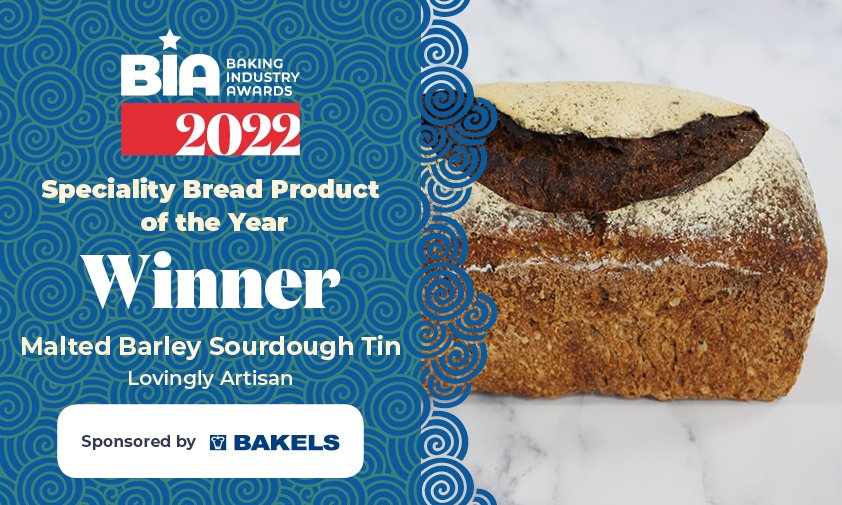
The Lovingly Artisan Bakery in Kendal, Cumbria, has just won the ‘Best Speciality Bread Product’ in the Baking Industry Awards. They scooped this trophy with their Malted Barley Sourdough Tin Loaf (you can order it online).

Their press release states

“…we’re so proud of our Malted Barley loaf. It’s made using malted brewers’ barley from Warminster Maltings, the oldest traditional Maltings in England – a super ingredient that takes the flavour, texture and goodness of this hard-working hero bread up to 11”.

“A super ingredient” indeed! Thank-you Aidan Monks and Catherine Connor at Lovingly Artisan Bakery for those generous words. I am quoting their words in the hope that they may transmit
across to some in the brewing sector.

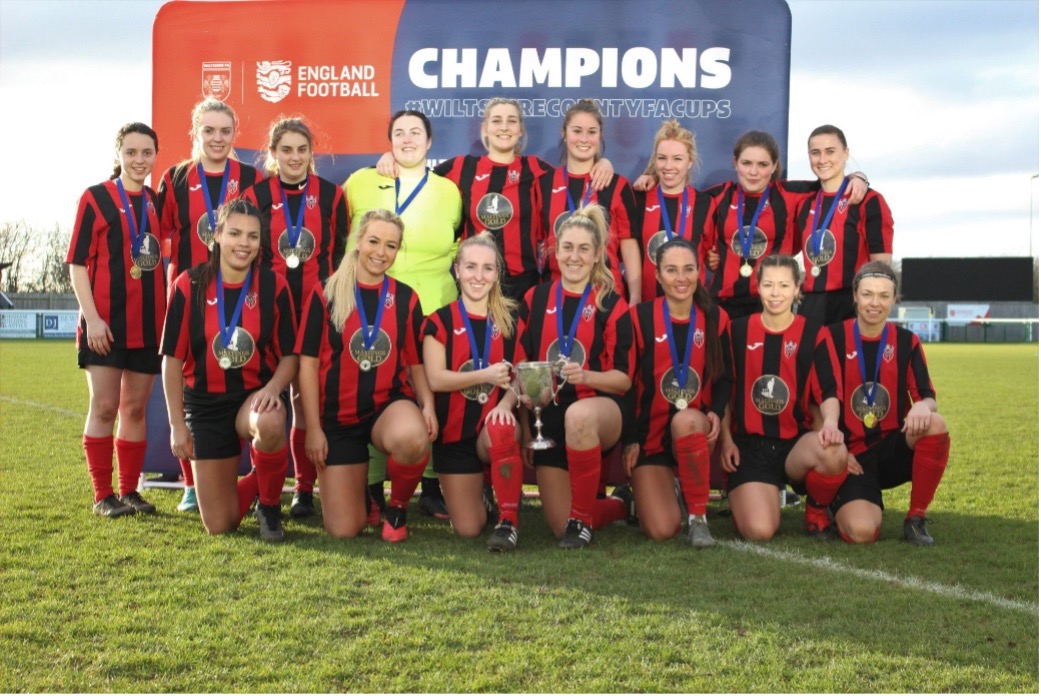
Warminster Town F.C.

“The Malt-Men” have new strip this year, although this photograph only shows one change, the pale blue ‘away’ shirts. On the backs of each shirt, across their shoulders, the words “Malt-Stars’ has been added, but too small to easily read from the touch line. That is not what I envisaged when I requested this, but perhaps it is as well. The press quote “The Malt-Men”, an unexpected consequence of our sponsorship deal with the club, and we are delighted with that.

The first team had an inauspicious start to the season, having lost several of last season’s star players in “the transfer season”! However, they have now regrouped, and are back into winning form again, winning 19 points from 10 matches, David Parry, chairman, advises me. They are now 13th in the league, with two games in hand against most of those teams ahead of them. So, there is a very good chance they will be chasing the top spots by the New Year.

Even more special, on 22nd October, the Ladies Team won their FA Cup tie against Bristol Rovers. That’s special! It occurs to me we need to somehow persuade the local Press to dub the Ladies as “The Malt-Stars”, then I would know exactly how to redesign next year’s strip.

Meanwhile, if you live locally, and you are into football, do try and wend your way up Weymouth Street on a Saturday afternoon, and support our footballers. They are doing a great job in putting our town on the map, a great success story, particularly amid what appears to be so much failure elsewhere in the world.

Robin Appel

Edition 42: Friends of warminster Maltings

Edition 42: Friends of warminster Maltings

Craft Beer in Jeopardy?

We began this year with renewed optimism. We thought we were at last “out of the wood”, & we could look forward to a really busy 12 months, and perhaps even make a profit. Two months in and we were not even sure if we had a future at all.

Our initial worst fears were quite different from the challenges that have since beset us. The old adage “when times are good, people drink a little; when times are bad, they drink a little more” no longer seems to apply. It now appears “…when times are bad, people stop drinking!”

A recent survey by The Morning Advertiser, the pub landlord’s daily newsfeed, claims that 70% of pubs “do not expect to make it through the winter”, due to low turnover and spiralling utility costs. That sounds a bit pessimistic to me, on the other hand, in the village where I live, in Hampshire, we have two pubs, and we have just learned the tenants at The White Horse have just handed in their resignation notice to the owners, a pub group.

It isn’t all about the cost of utilities, there are also staff shortages, and the increasing cost of both food and beer, which all contribute to this demise. But I want to leap in here and quickly point out that the increase in the cost of beer – according to the Office of National Statistics, so far up 13 pence per pint this year – is far more about the cost of utilities, wages, packaging, and distribution, than it is about the price of malt. Yes, barley prices are sharply up again this harvest, and malt prices will have to follow, but this increase on its own will only add between one and two pence per pint!

But it does not stop there. CF Industries have recently announced that they are closing down their Billingham fertiliser plant, a serious by-product of which is Carbon Dioxide, necessary for keg beer production. This only adds to the woes we face across the U.K. brewing landscape. The British Beer & Pub Association (BBPA) is calling for the government to intervene, but I doubt they will get much response.

Meanwhile, our weekly sales of malt have begun to reflect all this. Our customers are all still there, and they are all still brewing, but a significant number of them are not brewing quite as much as they would like to.

As I wrote to one, who emailed me on this subject last week, we all have to get through this, as best we can. There is a very good reason why, because the “sunnier uplands” will always be there another day.

Whisky Galorious!

 Swinging from “uplands” to the Highlands, and from beer to ‘Scotch’, you may have recently read the story about the cask of ‘single malt’ whisky made by the Ardbeg distillery on Islay, distilled and laid down in 1975, and auctioned a few weeks ago. It sold for a staggering £16m., putting the value of a single bottle, of a total of 440 bottles, at £36,000 each! (The previous record price for a cask of single malt was just £1m.).

The Knight Frank Valuation Index was asked to comment on this extraordinary price. They pointed out, of course, that this whisky is 47 years old, but also, that this whisky was made from malt made at the distillery when Ardbeg still operated their own original ‘floor’ Maltings.

Hey! That’s what we do – floor made malt! Now, if I thought any of our distiller customers are, another day, going to be able to sell a cask or two of their English Single Malts at even a six-figure sum, I feel I should be inserting a “consequential” clause into their supply contracts.

This would never benefit me, I’m too old, but for the future posterity of the Maltings, I cannot help concluding that this would not be an unreasonable thing to do. I am thinking about it!

But I deliberately relate this story to point out, it is not all bad news at the moment.

Customers to the Maltings.

One standout feature of this year at the Maltings has to be the number of customers who have requested to visit us. We have received whole teams from both Breweries and Distilleries, and we are due to carry on, hosting both disciplines in this month of September.

I really welcome this because these are opportunities to learn from each other. I am neither a trained Brewer, or a Distiller, but I do know a little bit about barley and malt, and when I am talking with customers it is sometimes surprising what more we both discover we can achieve together.

I attach a photograph of our most recent guests, Brasserie La Boyere, from France. Peter Smith (on the left) standing alongside me with his father Bill (on the right), are both English, but Peter has now made France his home. Bill has to be our oldest visitor, by far, he is 101 years old! You would never have thought it, he made it all around the Malt floors, almost unaided, and continuously fired all the right questions at me, the whole way round.

After a couple of hours of interrogation and discovery, we loaded up the Smithmobile with 10 bags of our finest Maris Otter malt and pointed the way to the Portsmouth ferry.

Now then, methinks, if I should make it to 101 years old, that “consequential” clause in the Distillers Malt supply contract, might benefit me, after all!

 PLEASE: Do what you can to save our pubs!

Robin Appel